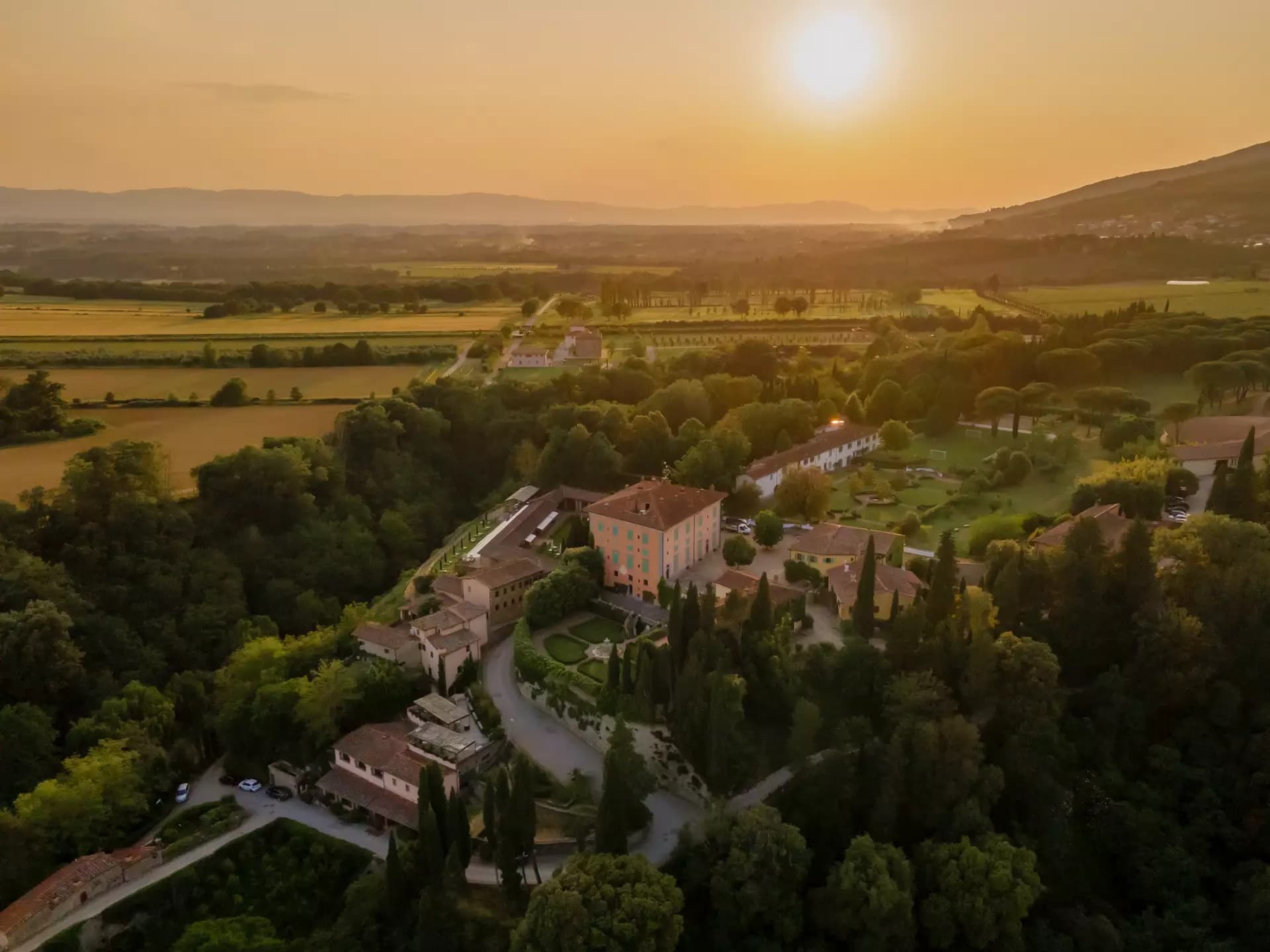
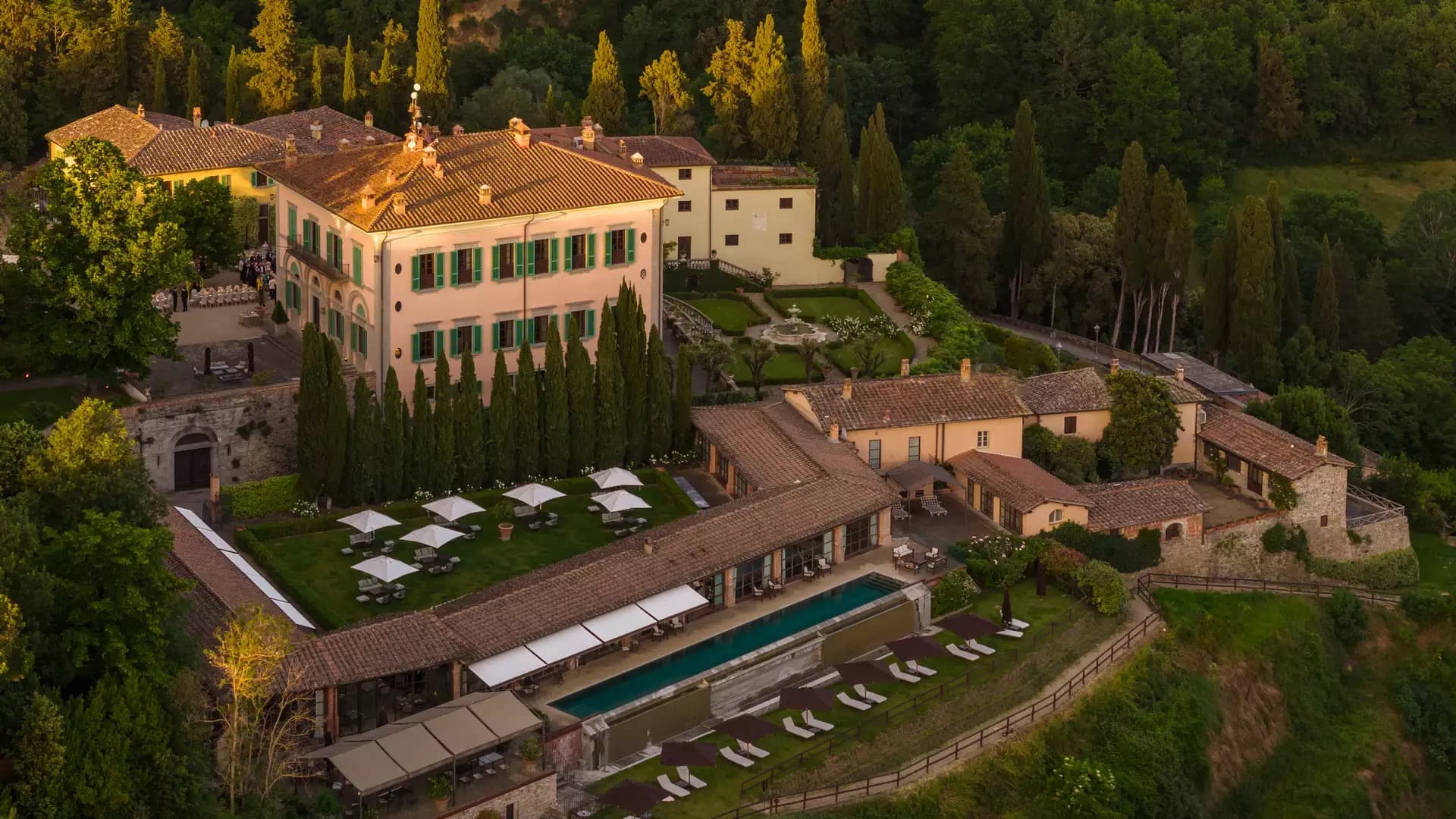
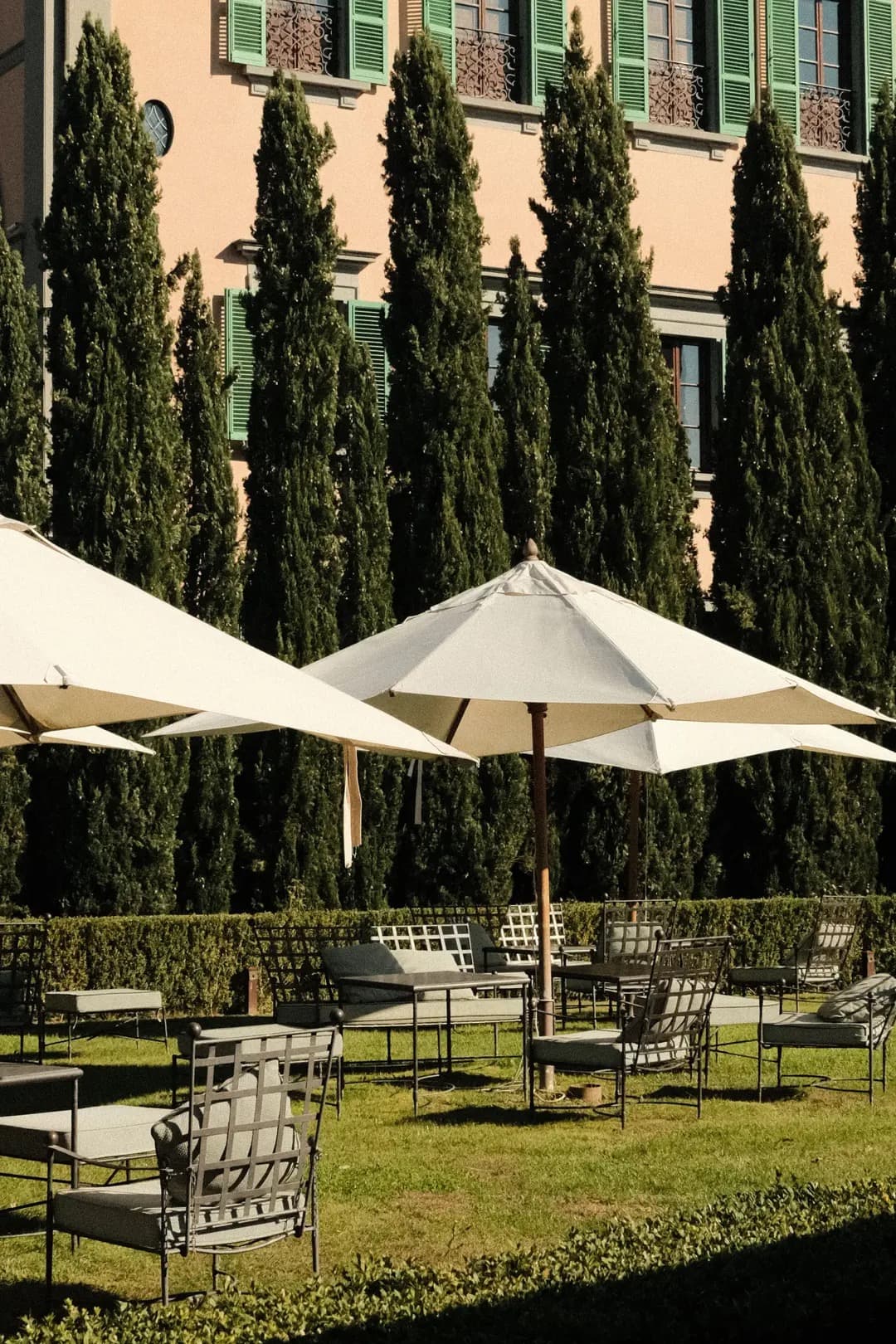
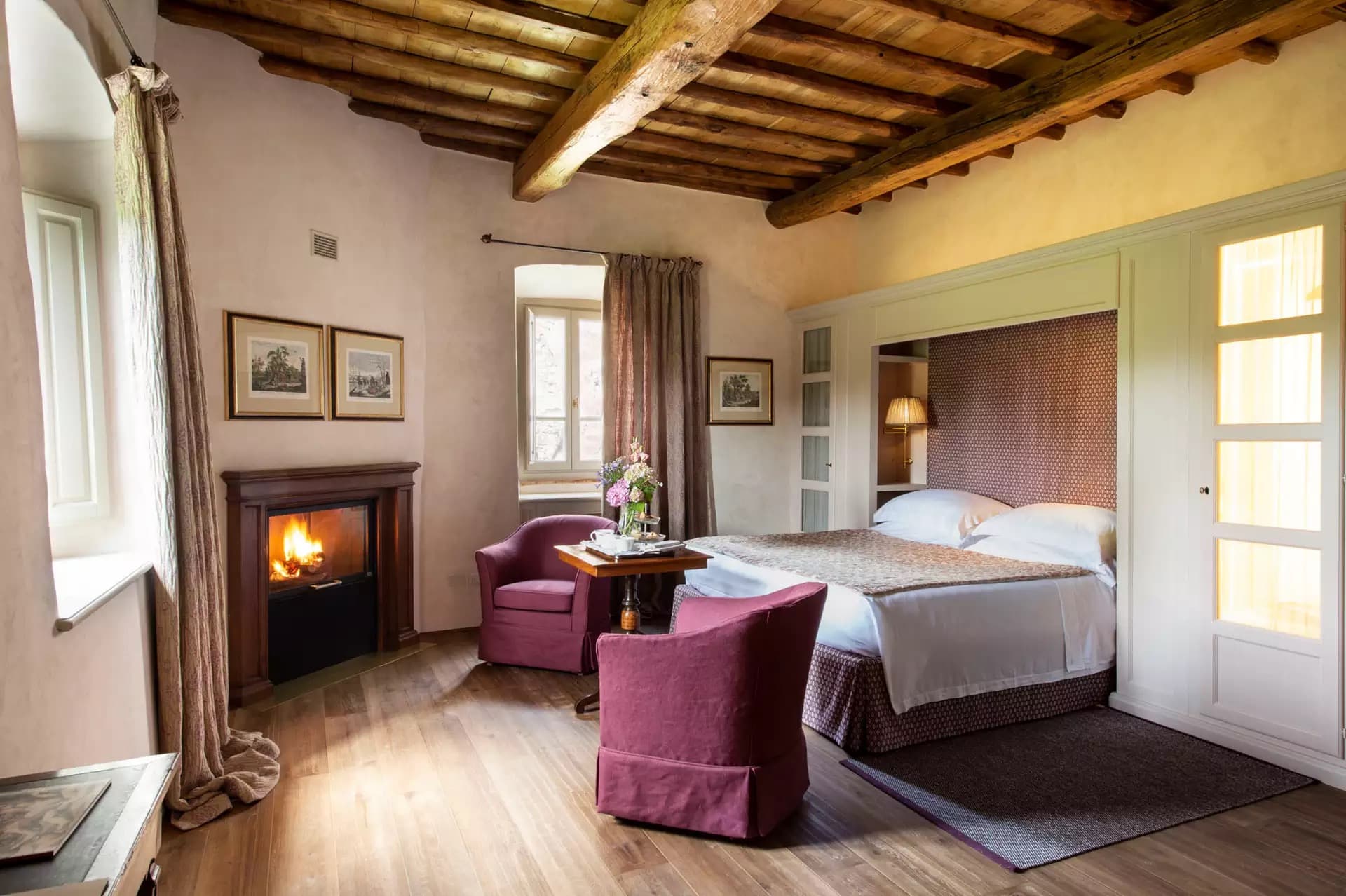
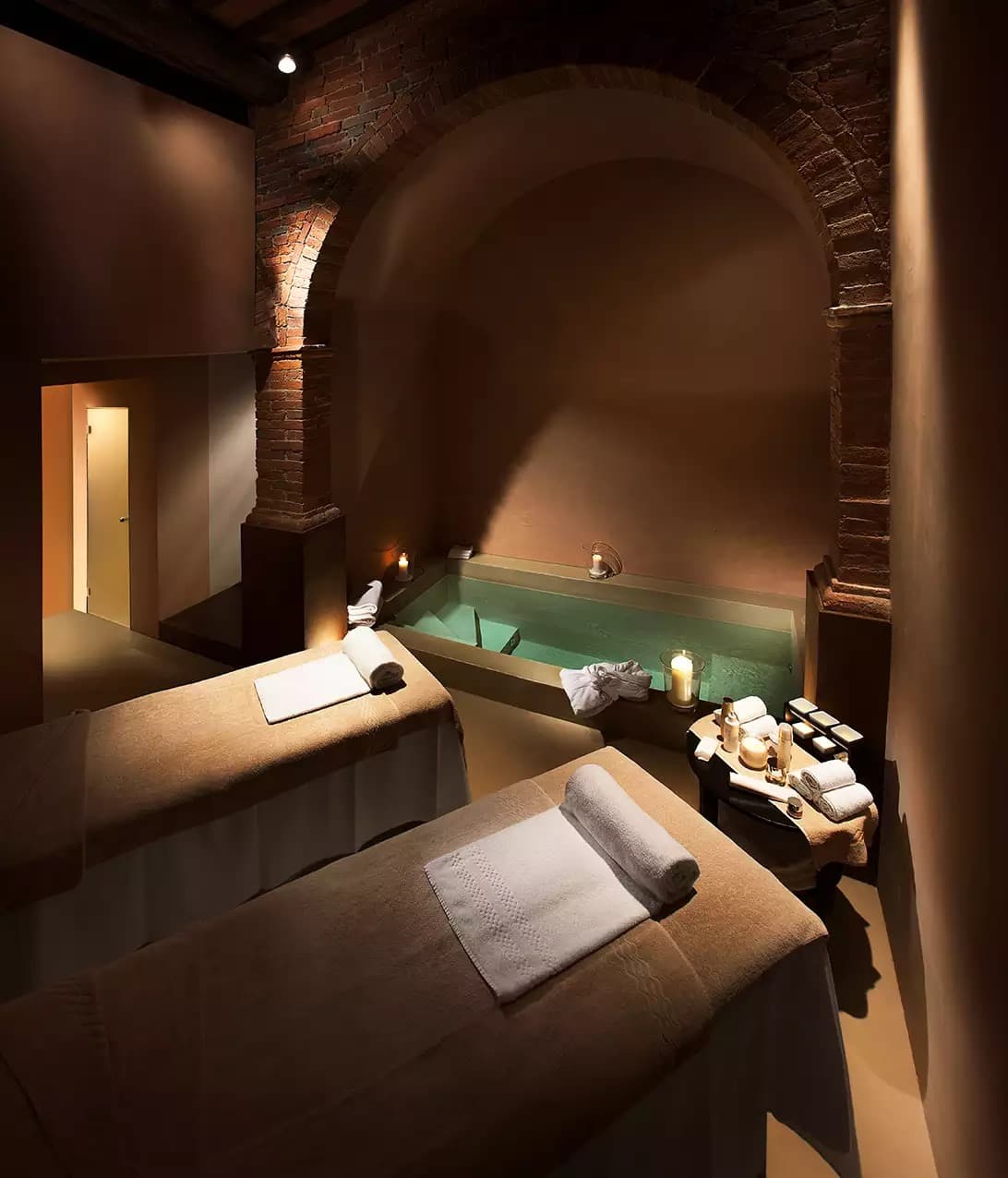
A medieval Tuscan hamlet between Florence and Arezzo, bought by Ferruccio Ferragamo in 1993 and restored over thirty years — sixty suites in the village and the Aie, three villas,…
The verdict
A thirteenth-century Tuscan hamlet held by the Ferragamo family for thirty years, restored slowly and stitched into an eleven-hundred-hectare working estate of vine, olive and forest. Few addresses in Italy keep the village, the kitchen and the cellar under so single an editorial hand.
From the editors · Vedere House
The particulars
Style
Restored medieval hamlet on a thousand-year-old hill, between Arezzo and Florence
Estate
Roughly eleven hundred hectares — eighty-five of vineyard, thirty-three of olive — under organic management since 2015
Rooms
Forty suites in the borgo, twenty in the Aie del Borro, plus three private villas — the Casetta, the Mulino and the Dimora Storica
Tables
Osteria del Borro for the long Tuscan dinner; Pomario at the Aie for lunch in the kitchen garden; the Tuscan Bistro and Vincafé for the everyday
Cellar
Il Borro IGT, Polissena, Pian di Nova — bottled on the estate, first harvest 1999
Bath
Spa La Corte, set under the brick vaults below the village
Stables
Riding into the vineyard at dawn, by the day or the week
Best for
A long week in late September, into the harvest
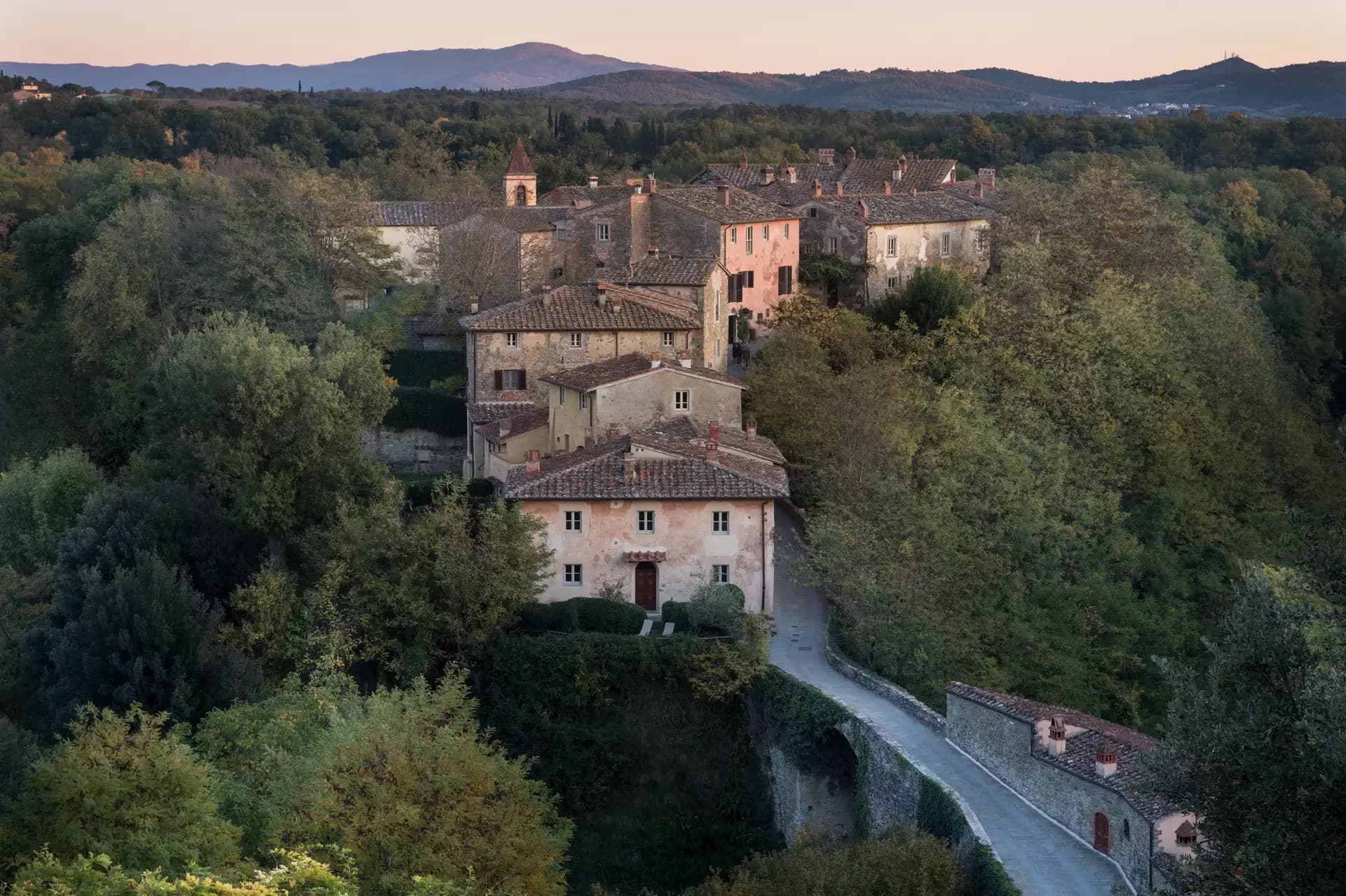
Il Borro sits on a low ridge above the Valdarno, halfway between Florence and Arezzo, and has been there in some form for a thousand years. The hamlet was first documented in 1254, was held for centuries by Tuscan dukes, and passed through the Hohenlohe Waldenburg family and the House of Savoy before Ferruccio Ferragamo bought it in 1993. Three decades of restoration followed — first the farmhouses, then the wine, then the village itself, opened as a hotel piece by piece as the houses came back into use. His children Salvatore and Vittoria run it now.
“
The village was kept as it was found, wherever it could be — only the things that had to change, did.
”
Sur place
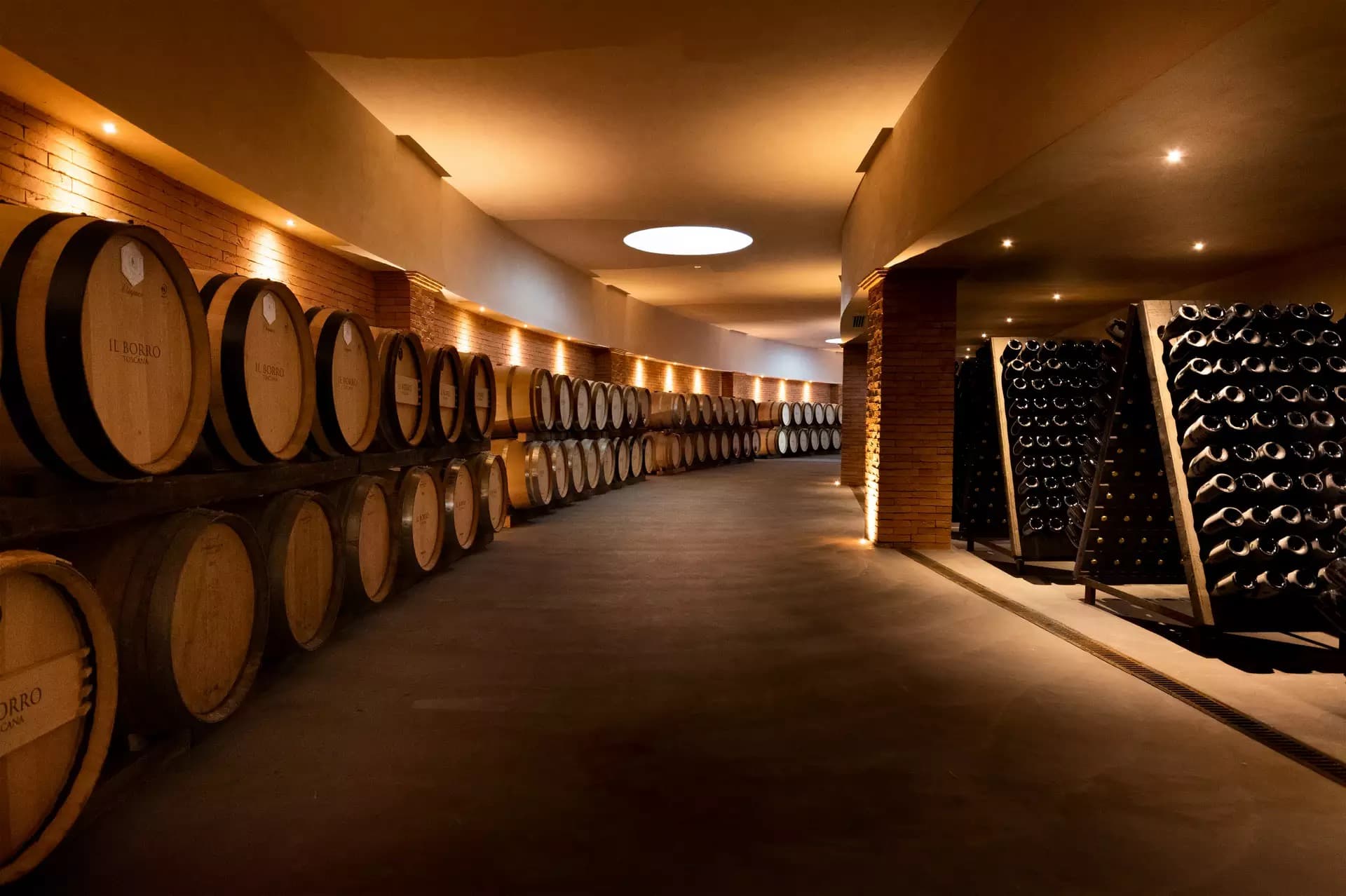
The estate is the part most country properties don't have. Eleven hundred hectares of working land — eighty-five of vineyard, thirty-three of olive, the rest in forest, kitchen garden and pasture — under organic certification since 2015. Eight wines are bottled here under the Il Borro label, the first vintage 1999, the cellar curving below the village in cool brick. The kitchen garden runs the menu in summer; Tuscan producers within the valley run it the rest of the year.
Sixty suites between the borgo and the Aie del Borro, plus the three private villas — the Casetta in the merlot, the Mulino in the old watermill, and the 1854 Dimora Storica with its parterre and pool. Osteria del Borro for dinner, Pomario at the Aie for the longer lunch, and Spa La Corte under the village's brick vaults when the afternoon asks for one. Riding at dawn, truffle in October, the harvest in late September. A long week is the right length; two is better.
Signature moments
01
The hamlet, before dinner
The borgo is the part the Ferragamos chose first — a small medieval village with a chapel, a single street and forty suites laid into the houses around it. Documented in 1254, restored from 1993, kept as it was found wherever it could be. The village closes the main road at dusk and the only sound is the bell.
02
The cellar below
The wine is the second thing the family built here — eighty-five hectares of vineyard, organic since 2015, the first harvest in 1999. The barrel cellar curves under the estate, lit warm and held cool, with the Petit Verdot and the Polissena ageing along the brick. Tasting is at one end of the curve, by appointment.
03
A plate from the osteria
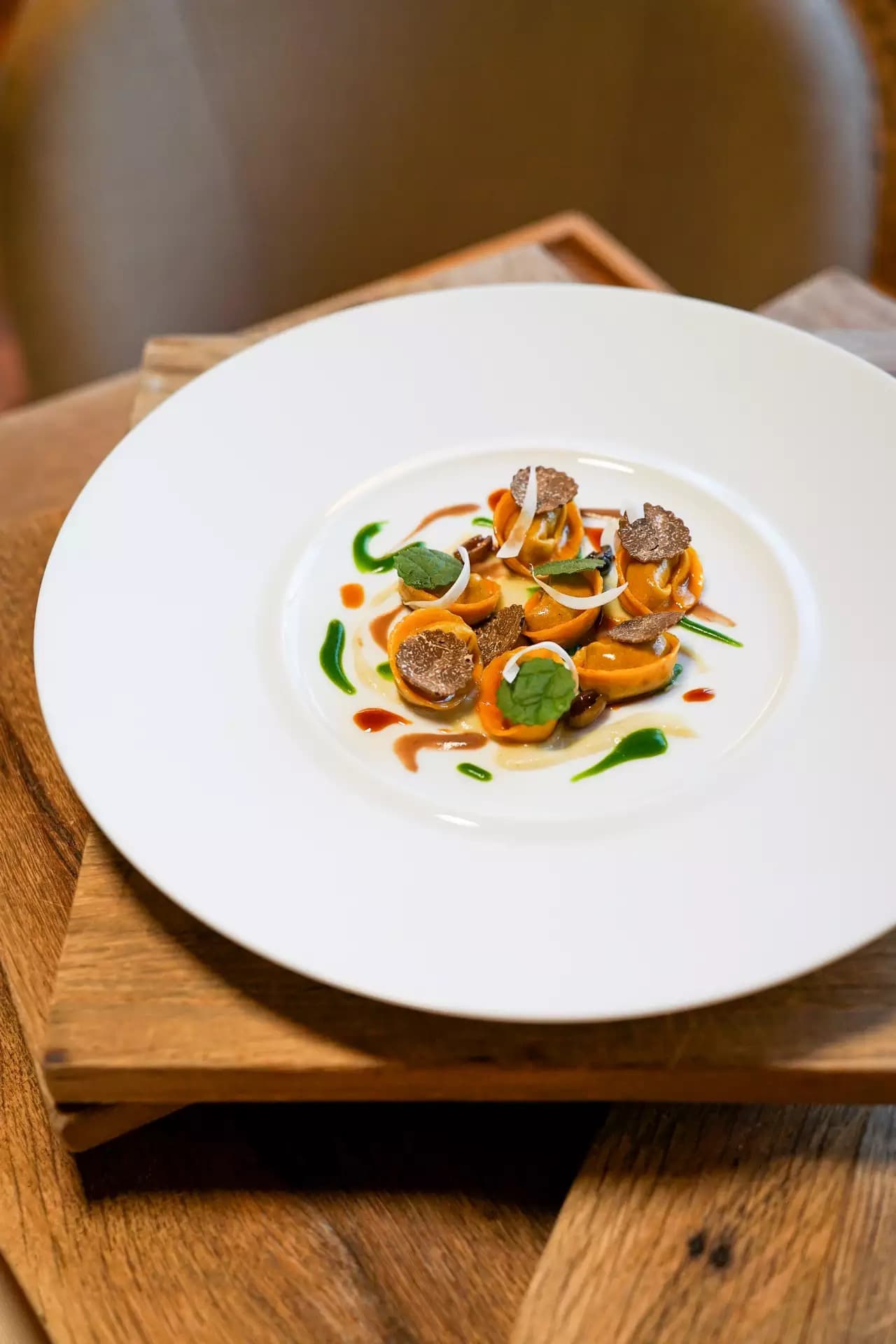
The Osteria del Borro reads from the estate's own farms — wheat, oil, vegetables, the truffle from the woods above. The pasta is made each morning in the village kitchen. Two tortelli, a shaving of black truffle, a single line of cèpe broth — the kind of plate that tells you where you are.