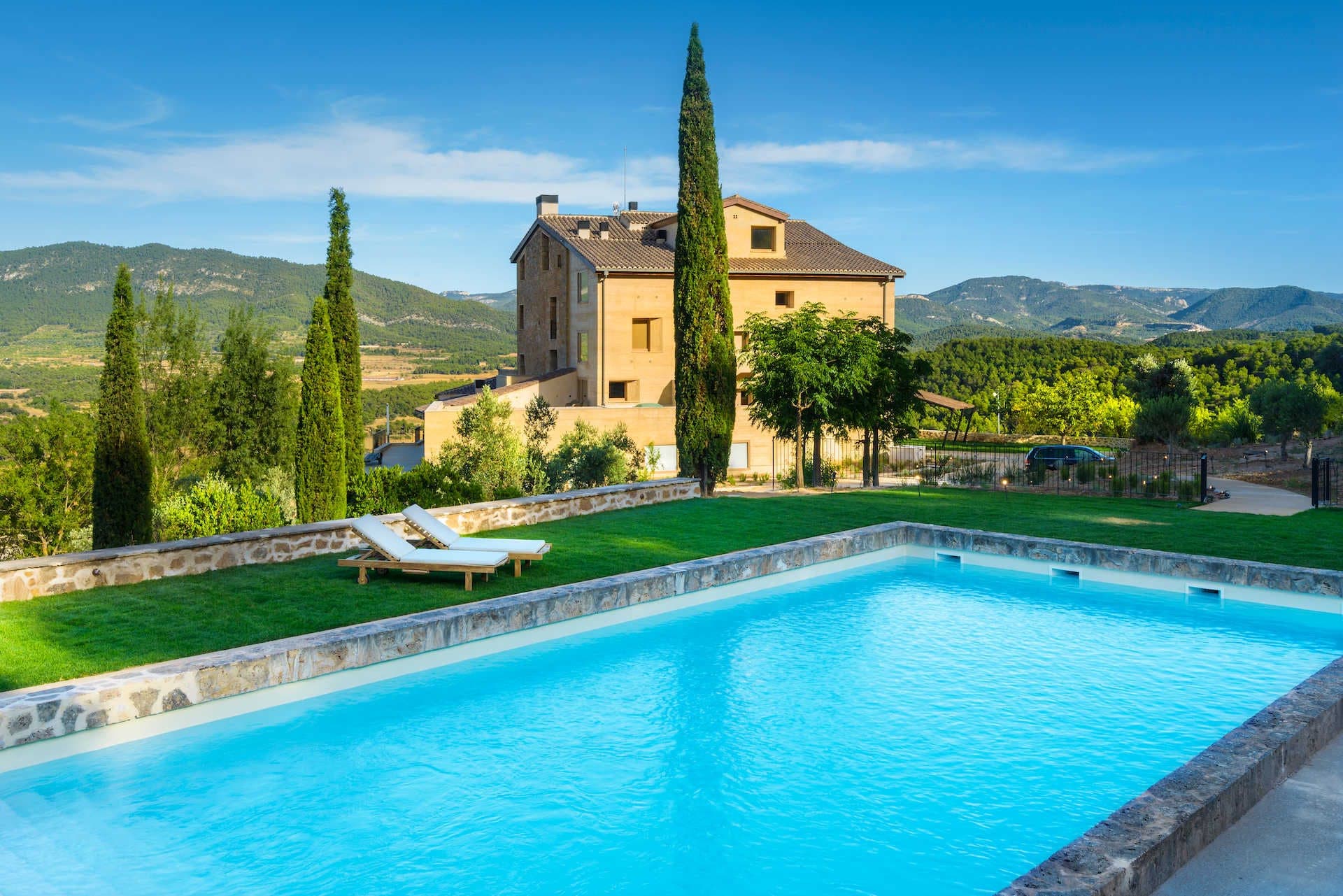
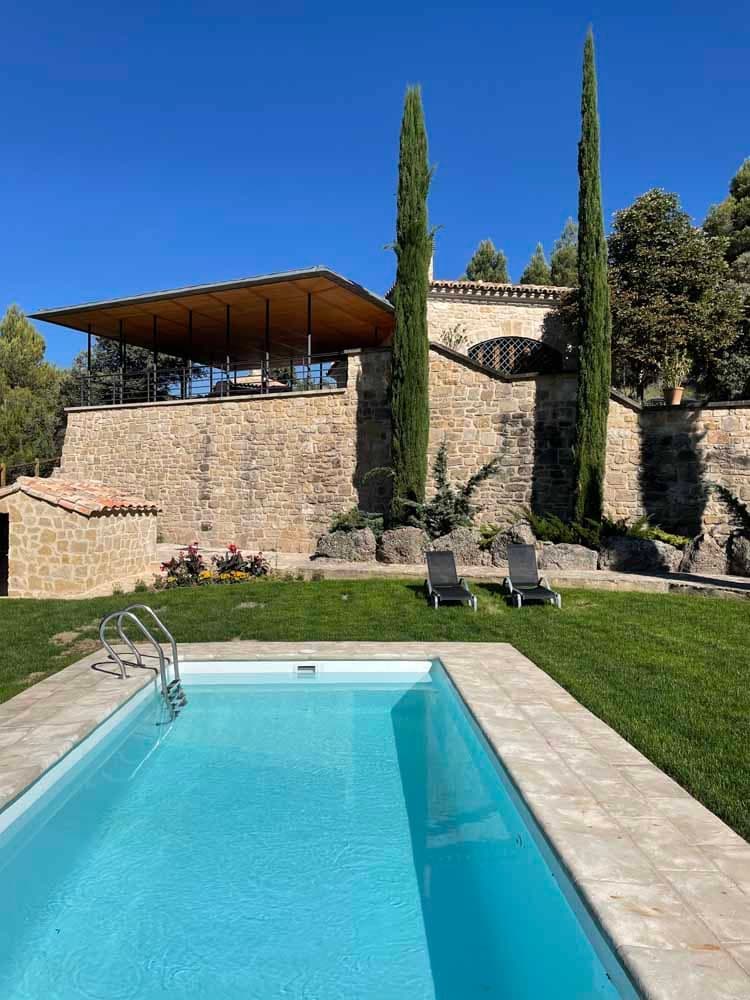
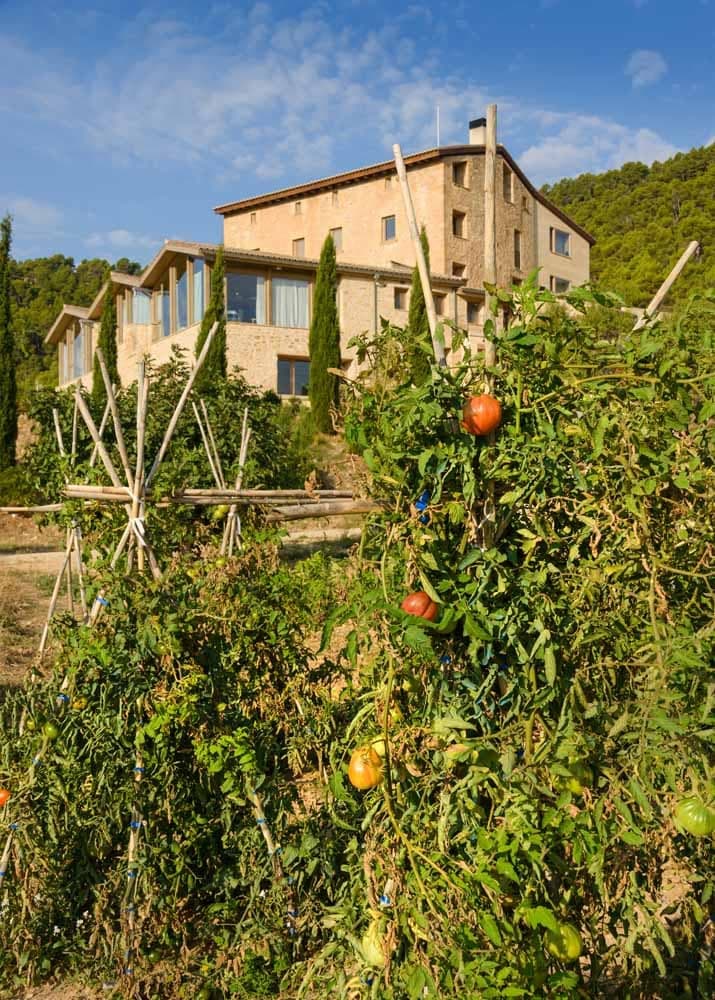
The road into Monroyo narrows before it reaches the village, then narrows again. Torre del Marqués sits at the end — a low manor in pale Aragonese stone, raised by Juan de la Torre y Grau in 1702 and held by his line ever since. The grounds are vineyard, olive grove, kitchen garden and pine forest; behind them, the Ports de Beceite, one of Spain's quietest natural parks, close the view.
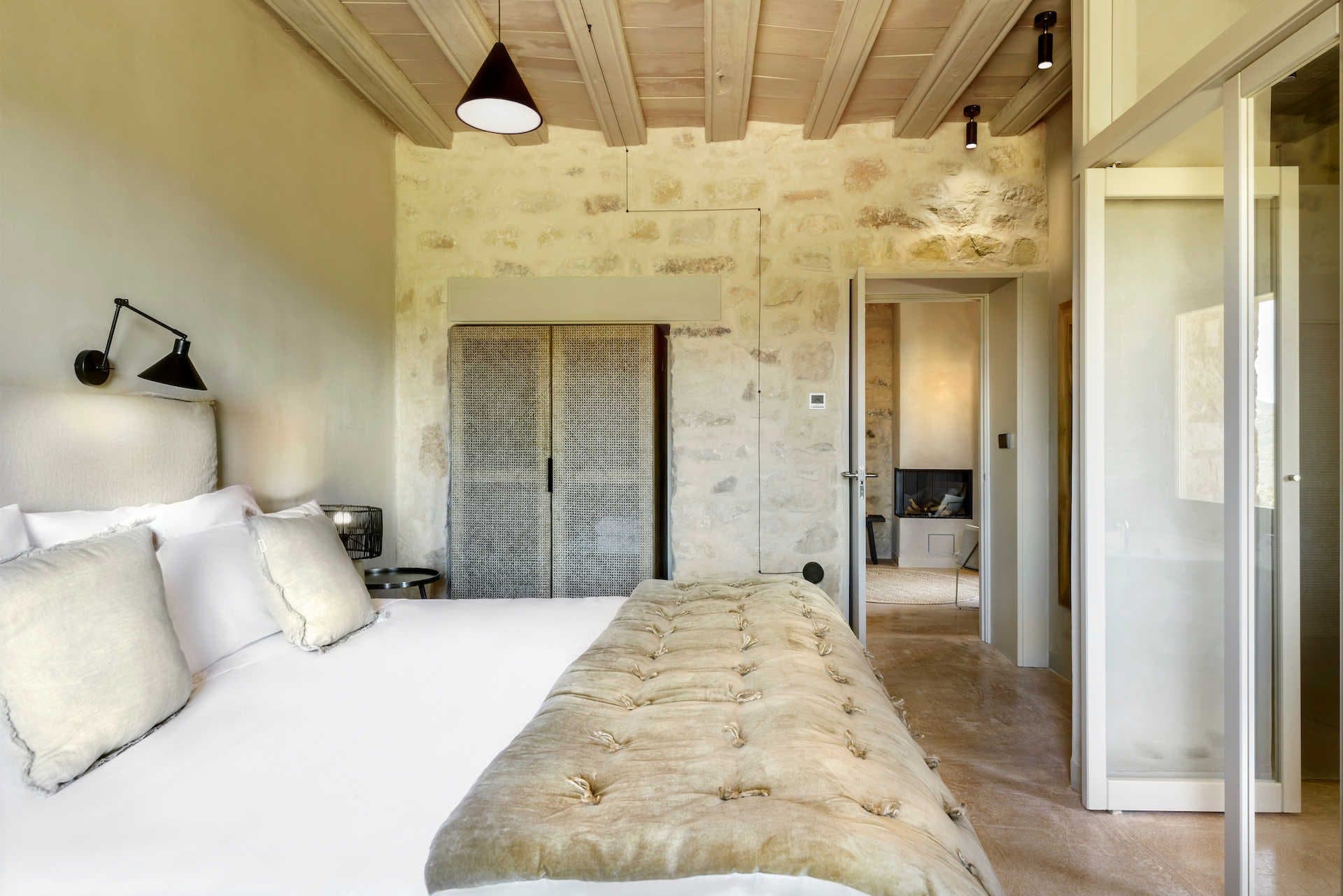
The family's lineage runs through every Spanish century. An ancestor stood at the Cid's side at Tévar in 1090; another commanded galleys at Lepanto under Felipe II; the marquesado of Santa Coloma was conferred in 1684. The manor itself opened as a hotel only recently — eighteen rooms, kept inside the original walls.
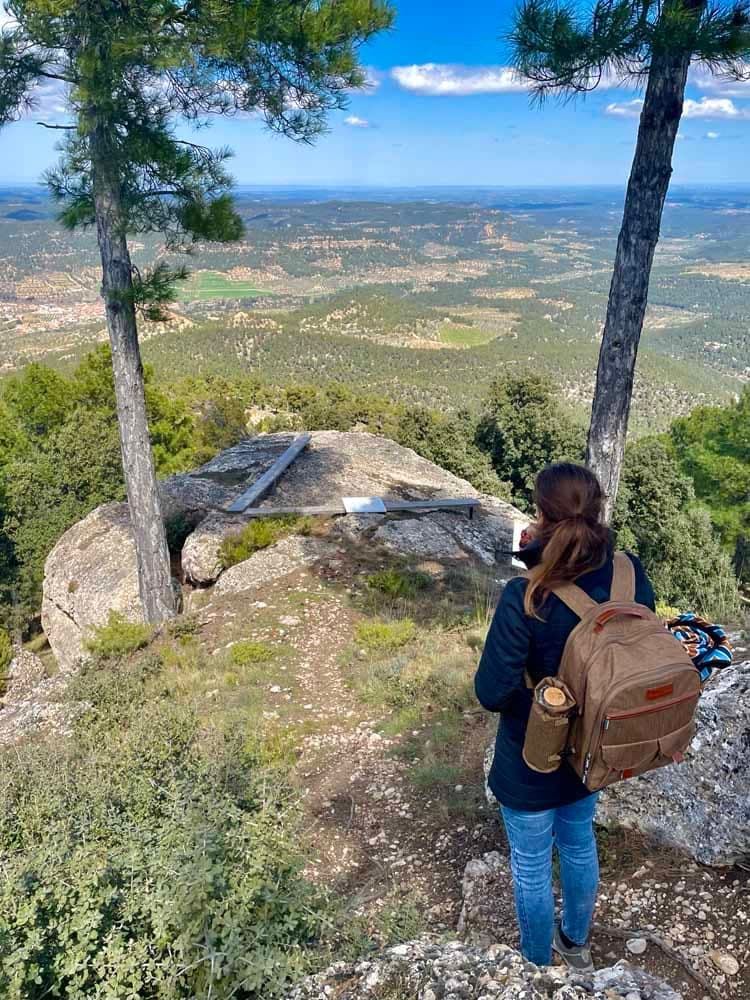
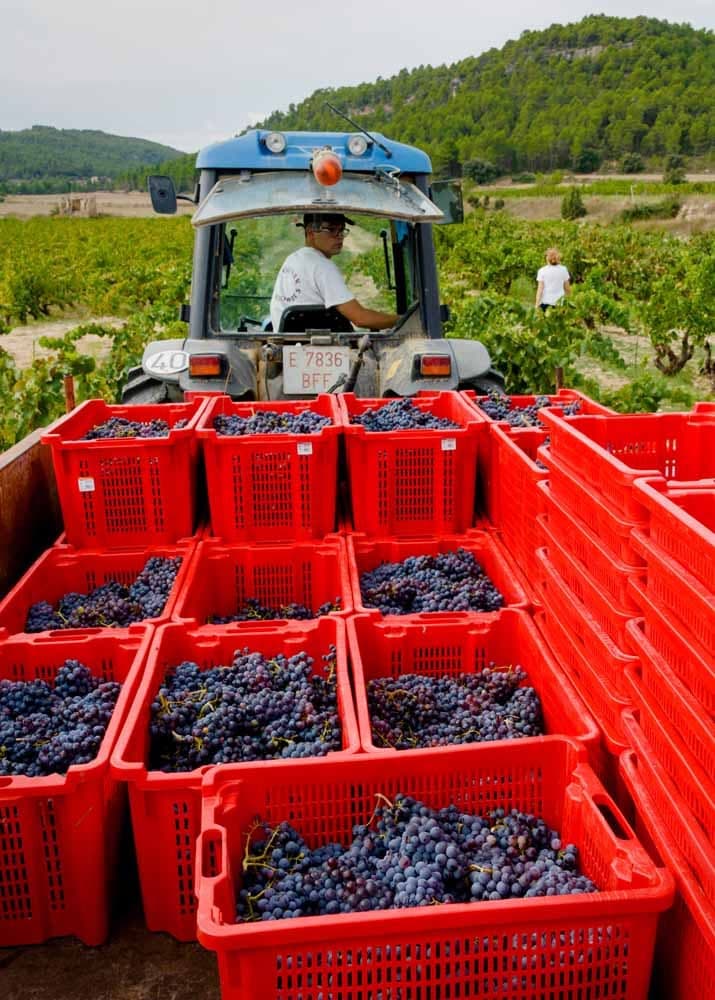
The Atalaya del Tastavins kitchen reads from the estate's own land — walled garden, vineyards, forest, the lookout above the Tastavins river. Lunch can be taken at any of the four; vines on three sides, or pine. The wine is the estate's own — fifty-year-old Cariñena and young Garnacha.
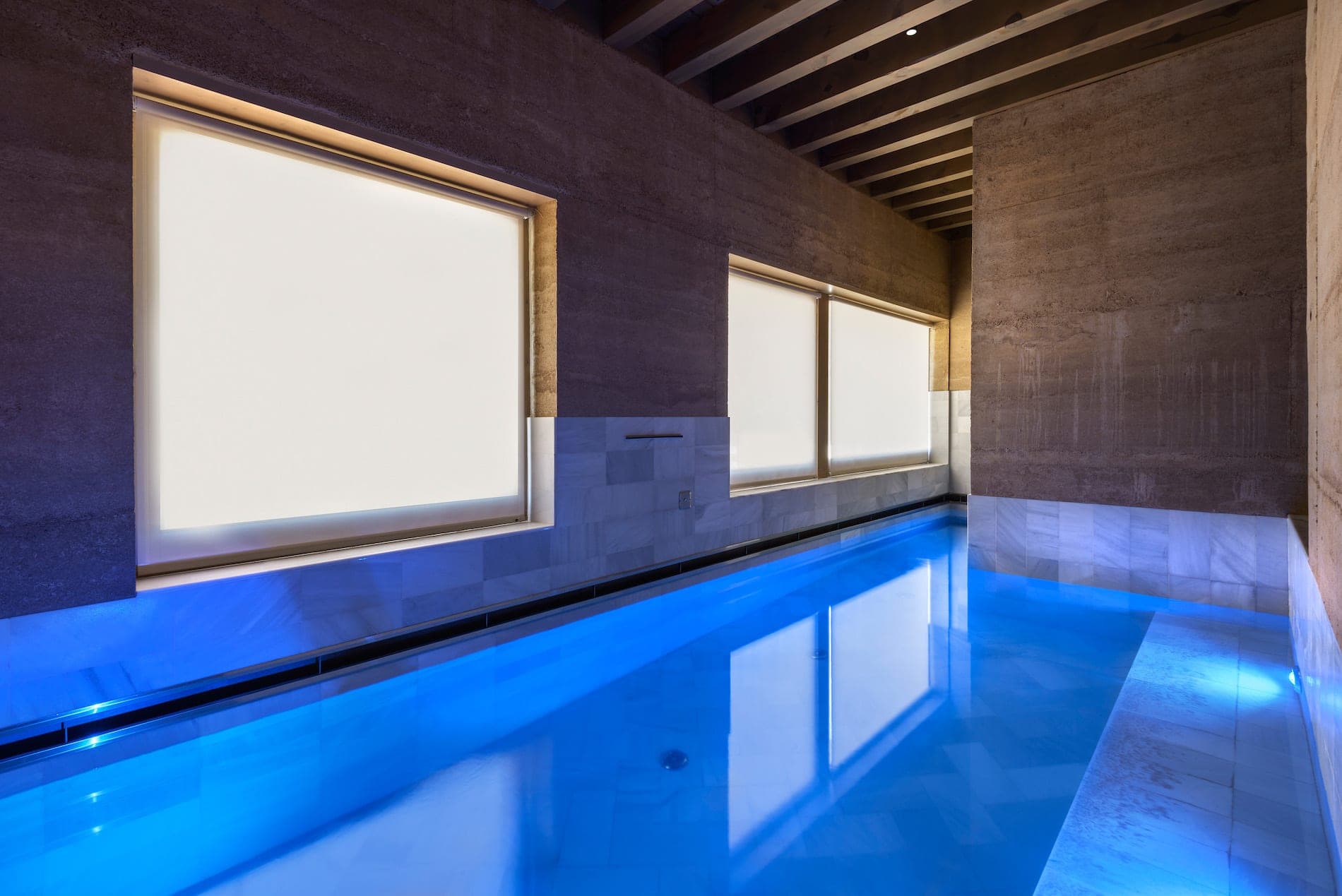
Eighteen rooms, a spa, a long path through the forest, a slower pace than the rest of Spain. The Matarraña is one of those regions that doesn't quite show up on the bigger maps. Stay a long week and that becomes the point.